Rosemary Extract Antioxidant Improves Shelf Life in Various Formulations
2026-09-08 14:12:13
Rosemary extract antioxidant, which is standardised from Rosmarinus officinalis leaves, is a powerful natural way to protect against oxidative damage in industries like food, medicine, cosmetics, and animal nutrition. The main beneficial chemicals in it are carnosic acid, rosmarinic acid, and ursolic acid. These work to stop lipid peroxidation chain reactions by scavenging free radicals. This plant antioxidant has become a trusted clean-label option for formulators who need to extend the shelf life of their products without using manmade stabilisers. It has been backed by peer-reviewed research and is recognised as an E392 substance in the EU and as GRAS in the US.
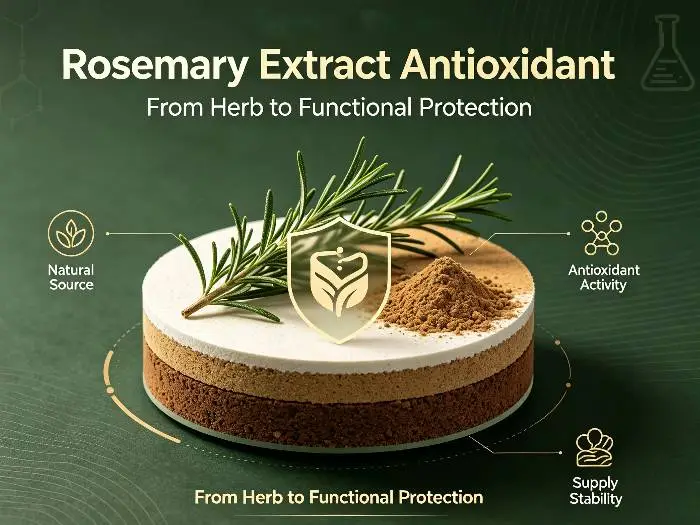
Understanding Rosemary Extract Antioxidant and Its Role in Shelf Life Extension
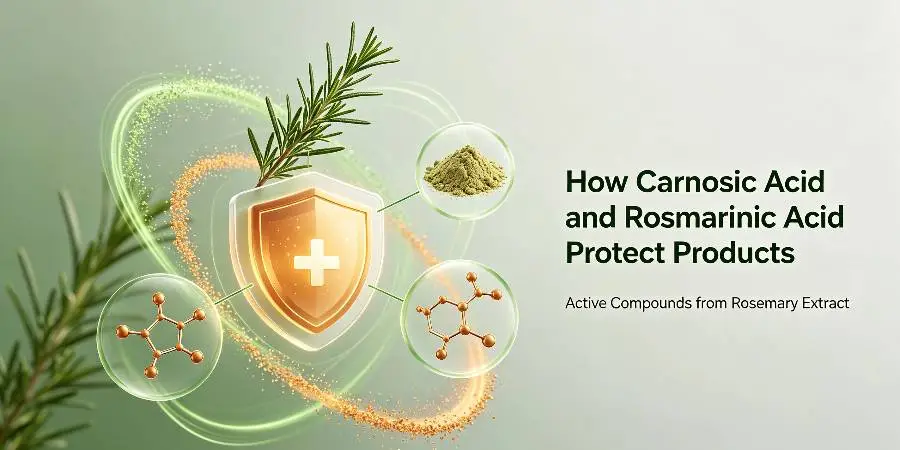
How Carnosic Acid and Rosmarinic Acid Protect Products?
Antioxidants that come from rosemary are useful because they contain two different kinds of substances. Another name for carnosic acid is a diterpene phenol. It likes to mix with fats. It stops peroxyl radicals from beginning chains of rancidity before they can happen. It is a phenolic ester that dissolves in water and works just as well to protect water-based and emulsion-based systems. They offer two kinds of protection that tocopherols and most man-made stabilisers can't do on their own when these molecules work together. There are studies in the Journal of Agricultural and Food Chemistry that show that when you fry, carnosic acid is more stable at high temperatures than BHA. Because of this, it is a great thing to put in foods that have been heated up.
Oxidative breakdown is the main reason why personal care items, nutritional mixes, and foods high in lipids go bad faster. And when it comes in touch with unsaturated fatty acids, it starts a chain process that doesn't stop. There are antioxidants in rosemary extract that stop this process both when it starts and when it starts to spread. In comparison to preservatives that only work in one way, this gives more protection. Because they know so much about how things work, companies that make products and people in charge of regulations choose standardised rosemary extract over general antioxidant mixes.
Comparative Advantages: Rosemary Extract vs. Other Antioxidants
Performance Against Synthetic Antioxidants
Even though BHA, BHT, and TBHQ are still used a lot, it's harder to explain why they're on labels because officials are paying more attention and people want clean labels. On the market today, rosemary extract antioxidant has the same or better oxidative stability index (OSI) scores as vegetable oils. It is also mentioned as a known plant on ingredient labels, which is a big plus.
It is clear that rosemary extract is better than other natural antioxidants when you compare them. These are the main things that make this performance unique:
- Carnosic acid is more stable at high temperatures than tocopherols, which means it is better at protecting cells from damage. It stays an antioxidant at temperatures above 180°C, while vitamin E breaks down a lot above 130°C. This means that it is not as useful in baked goods, fried snacks, and pet foods that are extruded.
- More matrix-compatible than green tea extract: Green tea polyphenols can make neutral-flavored goods more astringent and change their colour, and they work better with more matrix-compatible materials than green tea extract. Once the smell and colour are taken away from rosemary extract, it doesn't change how it tastes or smells in any way.
- Acceptance by regulators in several areas: rosemary extract has a compliance profile that procurement teams around the world can rely on. In the EU, it is allowed as E392, and in the US, it is GRAS. This is different from some other new natural antioxidants that are still being looked at by officials.
These reasons make rosemary extract the best natural antioxidant for companies that need to make products that work well, look good on the package, and follow the rules all at the same time.
Application of Rosemary Extract Antioxidant in Various Industries
The Rosemary Extract Antioxidant defense can be used in a wide range of formulations. The procurement and formulation teams can find the right standard and delivery format by looking at how it works in each area.
Food and Beverage Preservation
Lipid oxidation is the main way that oils, meat products, snack foods, and healthy drinks go bad. Food Chemistry (2020) research showed that rosemary extract made sunflower oil's induction period up to 4.5 times longer than it was in controls that weren't treated. When preparing meat, using natural antimicrobials together with oxidative rancidity slows down both bacterial growth and oxidative rancidity. This helps meet both food safety and shelf life goals. Clean-label protein bars, omega-3 capsules, and high-fat pet food blends are all fast-growing markets where this antioxidant makes a lot of sense.
Cosmetics and Personal Care Stabilization
Keeping the potency and appearance of active ingredients in emulsified creams, facial serums, and haircare formulations depends on how stable they are against oxidation. The water-soluble nature of rosmarinic acid protects aqueous phases, and the lipid components in emulsions are protected by carnosic acid. Cosmetic scientists like how modern deodorized rosemary extract mixes easily without changing the scent, and the fact that it has been shown to be active against reactive oxygen species backs up claims that it can help with anti-aging on product labels.
Pharmaceuticals, Nutraceuticals, and Animal Nutrition
When it comes to supplement capsules, softgels, and omega-3 products that are enclosed, oxidative stability has a direct effect on claims of potency and regulatory compliance. Rosemary extract helps keep lipid-soluble actives safe while they are being made and stored. Synthetic antioxidants are facing more and more pushback from consumers in animal feed premixes and pet food kibble. The standardized rosemary extract powder can be added slowly to dry premix systems. It protects against fat oxidation during extrusion and storage in a way that can be measured.
Procurement Guide: Sourcing High-Quality Rosemary Extract
What to Verify Before Placing a Purchase Order?
Documentation is the first step to reliable sourcing. When purchasing managers look at a Rosemary Extract Antioxidant source, they should ask for and check the following:
- Certificate of Analysis (COA): Make sure the amount of standardized carnosic acid is correct and that the method used for the analysis is made clear. Reliable providers offer ranges of specifications from 5% to 20% carnosic acid, which have been checked using approved HPLC methods.
- GMP certification and facility audits: Following current Good Manufacturing Practice (cGMP) rules when making products guarantees consistency from batch to batch and lowers the risk of contamination.
- Heavy metal and microbiology testing: For pharmaceutical and nutraceutical uses, these reports should meet USP or EP pharmacopeial limits. Heavy metal and microbiology testing is also very important.
- Available delivery formats: Make sure the seller offers both an oil-dispersible liquid form and a water-dispersible powder form, as each is useful for different formulation needs.
Wellgreen Technology uses supercritical CO2 extraction and molecular distillation to make rosemary extract that is standardized at 5% to 20% carnosic acid. There are two types of formats: oil-based liquid and water-dispersible powder. These can be used for a wide range of things, from lipid systems and feed premixes to nutraceutical pills and makeup emulsions.
Best Practices and Precautions for Using Rosemary Extract
Dosage, Compatibility, and Storage Protocols
Rosemary Extract Antioxidant is usually used at levels between 100 and 500 ppm of total carnosic acid equivalent in food, but this depends on how much fat is in the food and how long it needs to last. Different concentration ranges may be used for nutraceutical and cosmetic uses, depending on the complexity of the matrix and the limits set by regulators. Going over the recommended levels might not make protection better, and it might change how sensitive matrices work.
The storage conditions have a big effect on how well antioxidants work before and after they are added. Things made with rosemary extract should not be exposed to direct light, high humidity, or high temperatures. Most of the time, the bulk extract can be kept for 24 months in sealed, opaque containers below 25°C. Putting the extract in early in the making process, before fat oxidation starts, gives the best protection during preparation.
Also, formulators should check to see if the ingredients might combine with iron and copper ions, which can speed up rusting in some materials instead of slowing it down. When chelating agents like citric acid are mixed with rosemary extract, they often have synergistic effects that make the whole system work better than what either ingredient does on its own.
Conclusion
The need for natural antioxidants keeps growing in the food industry, animal nutrition, nutraceuticals, and personal care. Rosemary Extract Antioxidant protects against lipid oxidation in a variety of formulations, as shown by scientific evidence. It also meets regulatory standards in major global markets and appeals to consumers who want products with clean labels. It comes in both oil- and water-dispersible forms with a standard amount of carnosic acid. This gives sourcing and formulation teams the freedom to precisely match product needs. If a business is looking for long-term antioxidant solutions, rosemary extract is still one of the best options that is both backed by evidence and useful in the real world.
FAQ
What is the primary function of rosemary extract in food products?
By stopping free radicals before they spread, rosemary extract stops fatty oxidation and rancidity in meat, fats, and oils before they happen. This directly increases the shelf life of the product and keeps the taste and nutritional value while not using artificial stabilizers.
How does carnosic acid differ from rosmarinic acid in formulation use?
Because it dissolves in oil, carnosic acid works best in lipid-rich materials like cooking oils, fat-based dressings, and meat products. Rosmarinic acid dissolves in water and protects water-based parts in emulsions, drinks, and personal care products. Both are useful for many applications.
Is rosemary extract suitable for pet food and animal feed?
Yes, standardized rosemary extract powder works well in dry feed premixes and extruded pet food systems. It replaces ethoxyquin and other manmade choices that are becoming harder to get in global markets because they are harmful to the environment.
What certifications should I verify when sourcing rosemary extract?
Ask for a current COA that confirms the carnosic acid test, the GMP facility approval, the heavy metal test results, and the allergen status paperwork. Depending on your target market and label claims, you may also need to get organic approval.
Partner with Wellgreen for Reliable Rosemary Extract Antioxidant Supply
Wellgreen Technology is a reliable company that makes Rosemary Extract Antioxidants. They offer 5% to 20% carnosic acid in both oil- and water-dispersible powder forms. Because our plant is GMP-certified, we can offer flexible OEM support and work with supplement makers, food companies, and cosmetic formulators. You can get a sample, COA, or special formulation price today by going to wellgreenherb.com or emailing us at wgt@allwellcn.com.
References
1. Frankel, E. N. (1996). Antioxidants in lipid foods and their impact on food quality. Food Chemistry, 57(1), 51–55.
2. Schwarz, K., Bertelsen, G., Nissen, L. R., et al. (2001). Investigation of plant extracts for the protection of processed foods against lipid oxidation. European Food Research and Technology, 212(3), 319–328.
3. Almela, L., Sánchez-Muñoz, B., Fernández-López, J. A., et al. (2006). Liquid chromatographic-mass spectrometric analysis of phenolics and free radical scavenging activity of rosemary extract from different raw materials. Journal of Chromatography A, 1120(1–2), 221–229.
4. Carocho, M., & Ferreira, I. C. F. R. (2013). A review on antioxidants, prooxidants and related controversy: Natural and synthetic compounds, screening and analysis methodologies and future perspectives. Food and Chemical Toxicology, 51, 15–25.
5. del Baño, M. J., Lorente, J., Castillo, J., et al. (2003). Phenolic diterpenes, flavones, and rosmarinic acid distribution during the development of leaves, flowers, stems, and roots of Rosmarinus officinalis. Journal of Agricultural and Food Chemistry, 51(15), 4247–4253.
6. European Food Safety Authority (EFSA). (2008). Scientific opinion of the panel on food additives, flavourings, processing aids and materials in contact with food on a request from the European Commission on the use of rosemary extracts as a food additive. EFSA Journal, 721, 1–29.